The Quiet Power of Melaka
Melaka, Malaysia
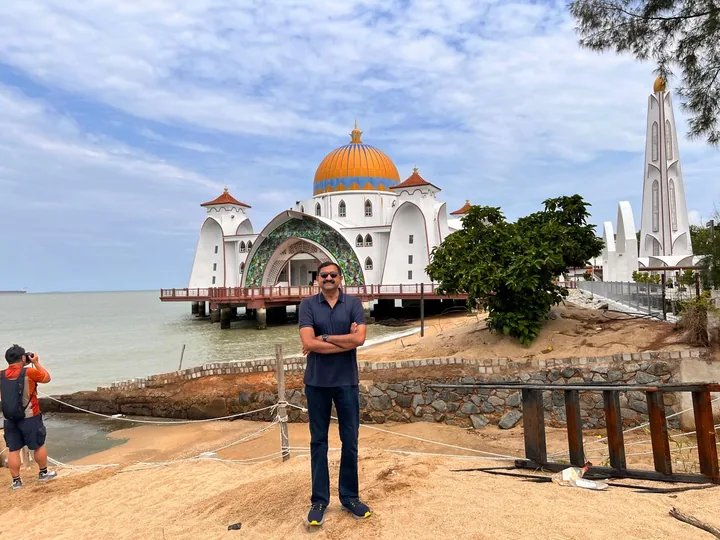
Stood here for a long while, just watching the ships go by.
This is the Strait of Malacca that thin blue line on the map between Malaysia and Sumatra. From the shore it looks calm, almost sleepy. But every few minutes another tanker or container ship slides past on the horizon, part of an endless queue that's been moving through this channel for centuries. A quarter of everything shipped on the planet passes through here, and so does a quarter of the world's oil , yet standing on the beach, none of that scale is visible. Just water, fishing boats, and a horizon doing what it's done for hundreds of years.
What pulled me in more than the shipping lanes, though, was everything this stretch of coast has seen. Melaka isn't just a strait on a map, it's a point where empires collided, where a fishing village became one of the richest ports on earth, and where three colonial powers took turns claiming the same small stretch of coastline.
A Kingdom Born From a Deer
Legend says it began with a deer. In 1396, a fleeing prince named Parameswara was on the run as a two-kingdom war had pushed him out, and he'd escaped along the Muar River with his men and his hunting dogs. Somewhere along that flight, he stopped to rest under a tree by the Melaka River. His hunting dogs, three of them cornered a mouse-deer. Instead of freezing, the little deer fought back, kicking one of the dogs clean into the river.
Parameswara took it as a sign, if even the smallest creature could stand its ground here, this was a place worth building on. He founded his kingdom on that spot, naming it after the very tree he'd been resting under the Melaka tree (also known as amla, or Indian gooseberry). The mouse-deer became the symbol of the kingdom, and it still is Melaka's emblem today. What started as little more than a fishing village on a riverbank would soon become the harbour that changed the map of Asian trade.
The Making of a Trading Empire
By 1401, Melaka had placed itself under the protection of Ming, China, and with that protection came prosperity. It grew into an international harbour, pulling in traders from across the known world , Arab and Iranian merchants who brought Islam with them ,a faith that, unlike in the Philippines where Spanish colonisers arrived first and left Christianity in its place, took root across the wider region through trade rather than conquest. Indian traders who settled and intermarried, giving rise to the Chitty community; and Chinese merchants who made the eight-month voyage from China and, because trade winds meant waiting almost a year before the return journey was possible, often married local women while they waited.
Those unions shaped Melaka's culture more than any single ruler did. Chinese men who married local Malay women gave rise to the Baba-Nyonya, the Peranakan community , with its own language, customs, and unmistakable cuisine. Chendul, Dodol, and Nyonya cooking still fills the shopfronts of Jonker Street today. Some of these dishes are similar to South Indian sweet “Halwa” which ofcourse gave me a feeling of South Indian dish when I tasted it there. And durian, the "king of fruit," presided over all of it, which a fruit so intense that not everyone can even get close to it, let alone eat it.
By the early 1500s, Melaka wasn't just a port. It was one of the wealthiest trading cities in Asia and that wealth made it a target.
Three Empires, One Small Port
In 1511, Alfonso de Albuquerque sailed from Goa and conquered Melaka for Portugal. The Portuguese held it for roughly 130 years, fortifying the town and building the walls of what would become A Famosa. The Dutch tried to take it earlier and failed and those same walls held them off. But in 1641, after a long siege, Melaka finally fell to the Dutch, who went on to rule for about 150 years.
The British came next, though almost by accident of European politics rather than conquest. In 1824, with the Dutch preoccupied fighting Napoleon back in Europe, they ceded Melaka to the British under the Anglo-Dutch Treaty. So this colonial territory quietly changed hands between European powers with barely a shot fired locally. The British held it until the Second World War, when Japanese forces took the town in just two weeks. British rule resumed after the war and finally ended in 1957, when Malaya gained independence. In 1963, Melaka became part of the newly formed Malaysia.
Walk through the town today and all three colonial eras are still layered into the streets , Portuguese ruins, Dutch red buildings around the town square, British-era architecture. One small port, three empires, and a history you can trace simply by walking a few hundred metres in any direction.
The Missionary Who Rested on the Hill
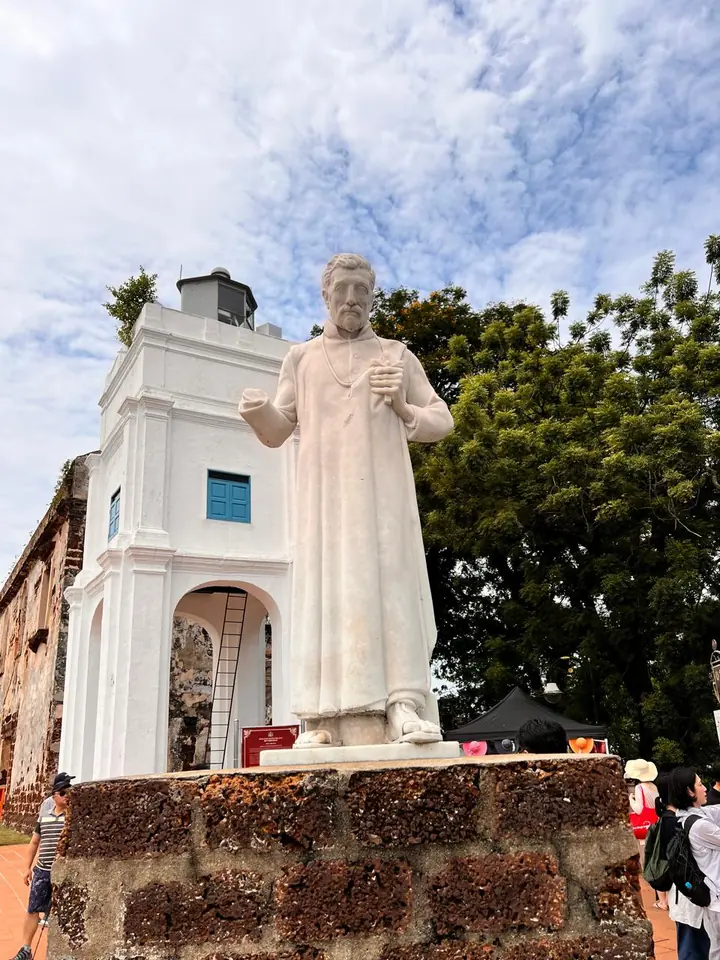
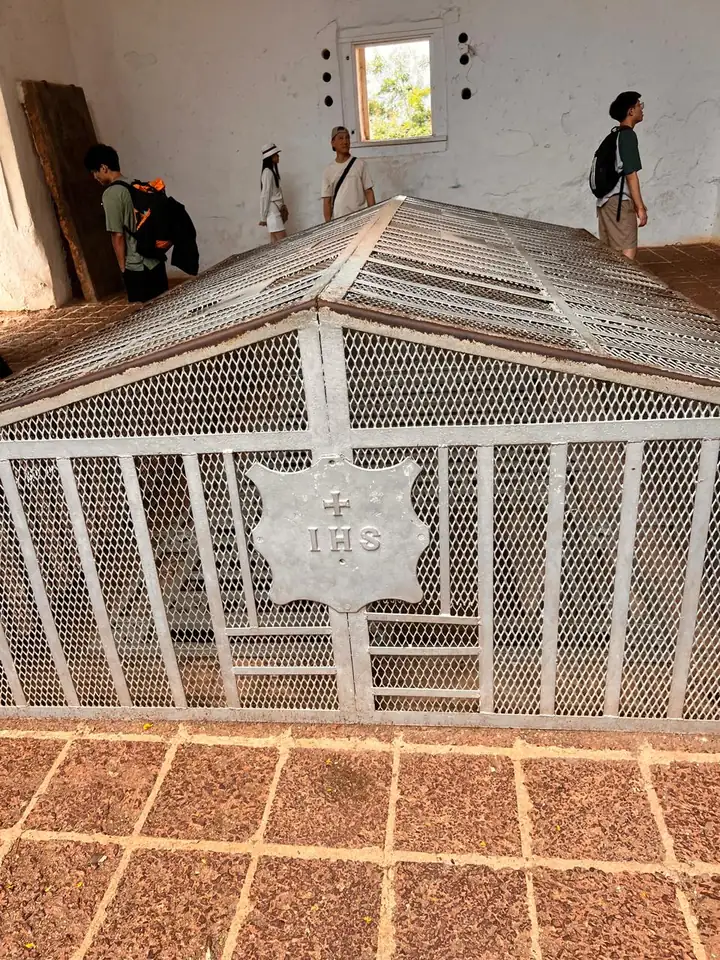
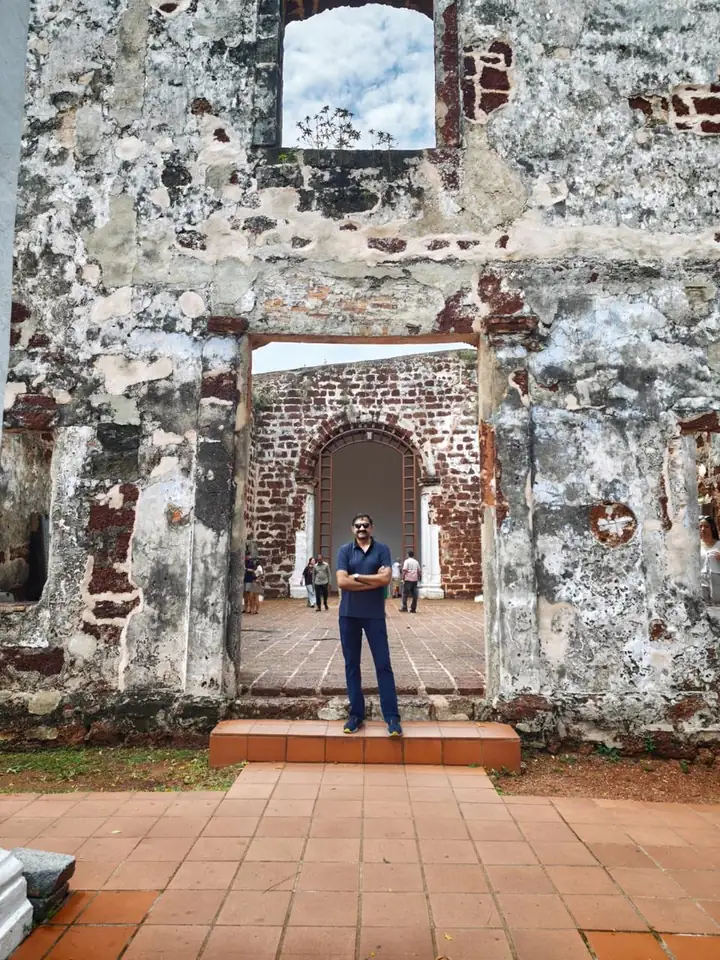
One figure threads through that history in a way that stayed with me, St Francis Xavier, the Jesuit missionary who worked across Goa, the Malay Archipelago, Japan, and China through the 1540s and 50s. He died in 1552 on Shangchuan Island off the Chinese coast, far from Melaka. But his body was brought here by ship and buried, without a coffin, in a grave at St Paul's Church on Melaka's hill.
The church still stands, and the empty grave is marked to this day. Months later, when the body was exhumed to be moved on, it was found still intact , a discovery that only deepened the reverence around him. He was eventually taken to Goa, where he remains enshrined in the Basilica of Bom Jesus, itself a UNESCO World Heritage site that draws pilgrims from across the world.
So this quiet hilltop in Melaka was, for a brief but significant stretch, the resting place of one of the most consequential missionaries in Asian history, a strange, very real thread connecting this Malaysian port town to Goa, on the other side of the Bay of Bengal.
A Heritage Town That Doesn't Feel Like a Museum
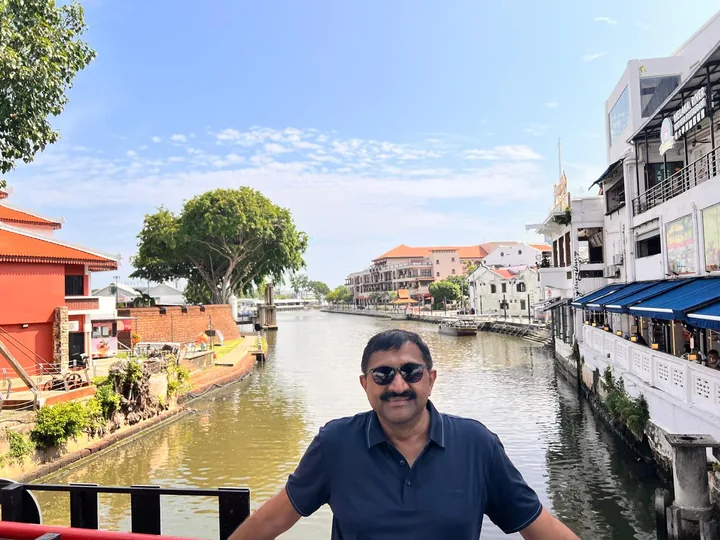
Today, Melaka wears all of that history lightly. St Paul's Church and the old Portuguese fort of A Famosa sit a short walk from Jonker Street, where the evening market fills with Peranakan food, trishaws strung with fairy lights, and now a Venice-style river gondola ride that's become one of the town's most-loved attractions.
Melaka was named a UNESCO World Heritage city in 2008, and it seems to take that title seriously. The government sets aside 1% of GDP specifically to maintain the greenery and character of the old town, so it doesn't harden into something purely ornamental. It's a heritage town that doesn't feel like a museum. History, colonisation, faith, food, and a slow river cruise all sit comfortably next to each other, on the same streets, in the same evening.
Sometimes the most powerful places are the quiet ones.