Evita at Recoleta; Where Memory Becomes Myth
Buenos Aires, Argentina
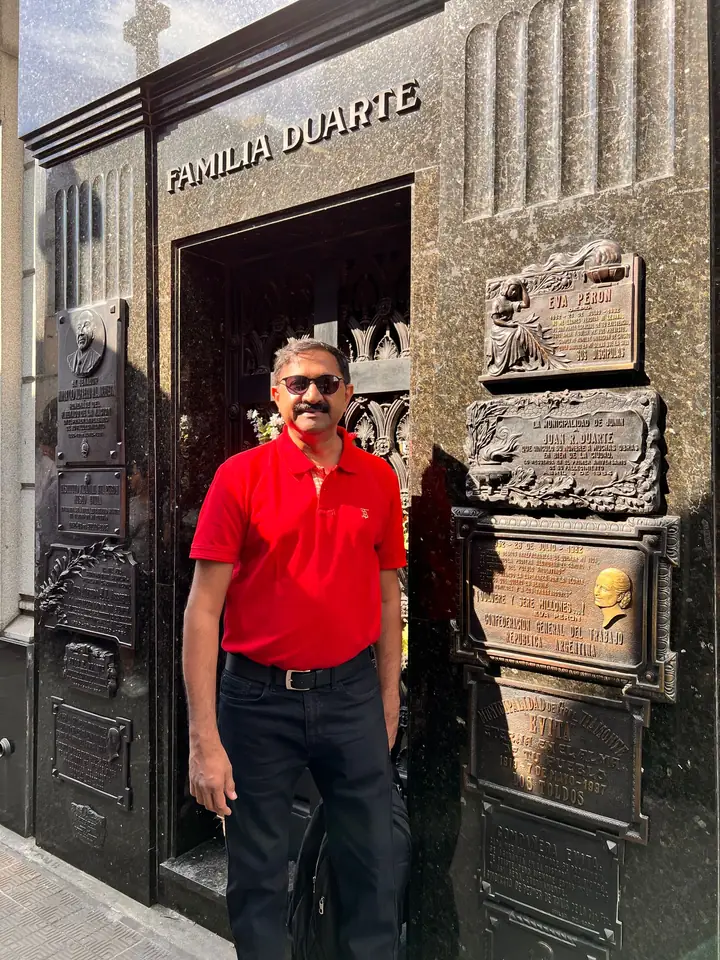
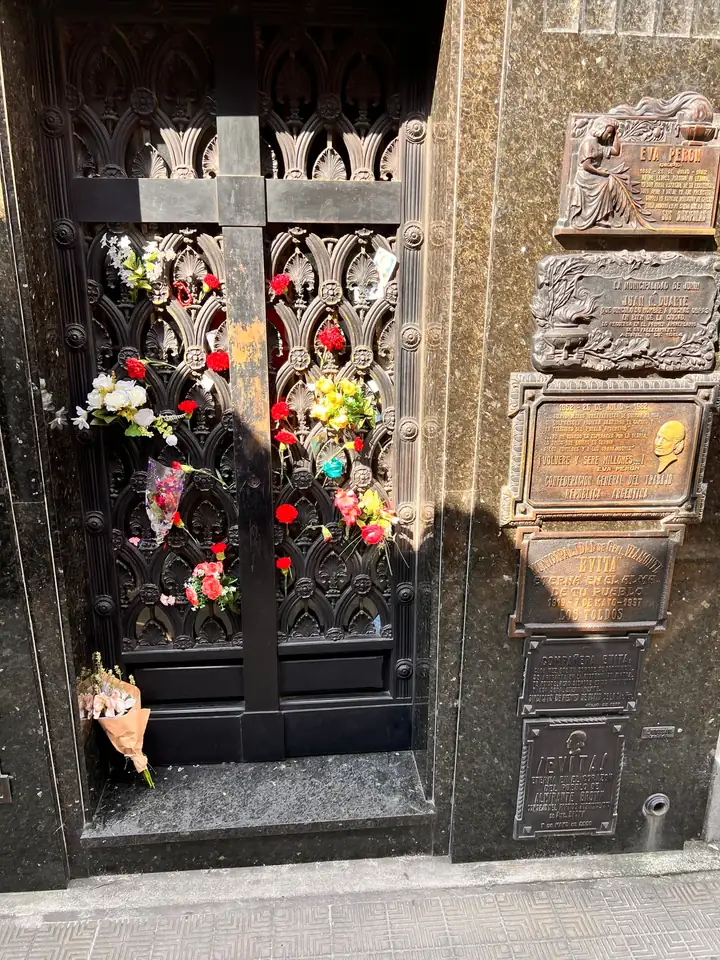
Standing before Eva Peron's resting place in Buenos Aires felt like more than a typical stop on a city tour; it became a moment of quiet astonishment about how a single life can grow into an enduring legend.
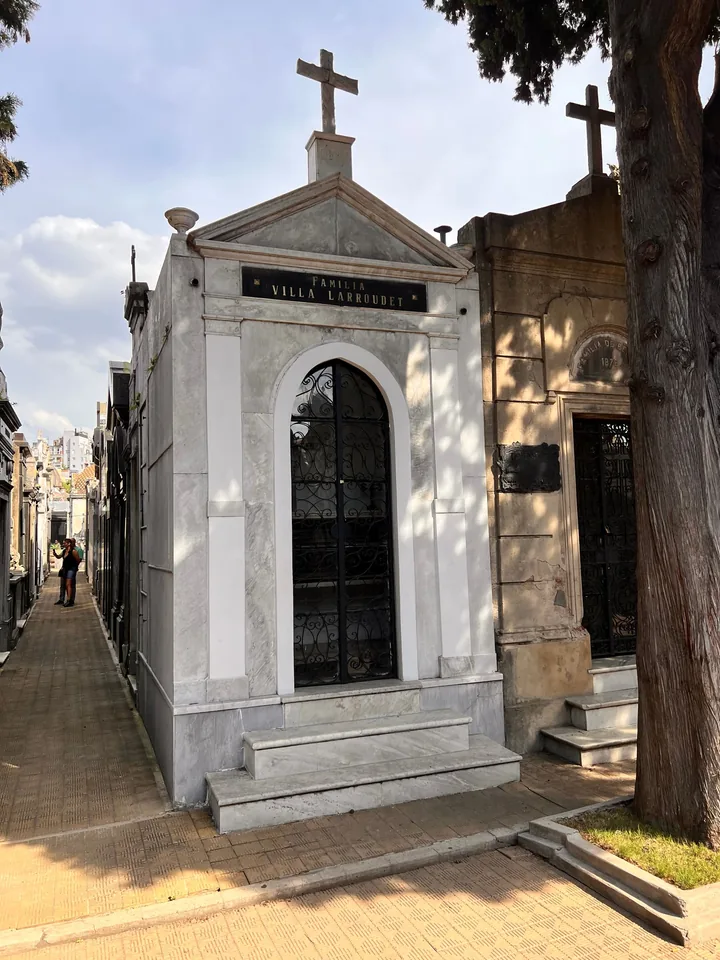
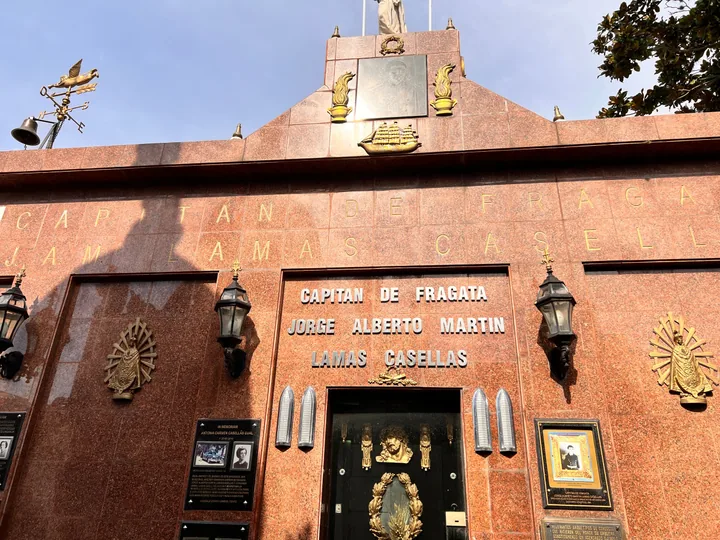
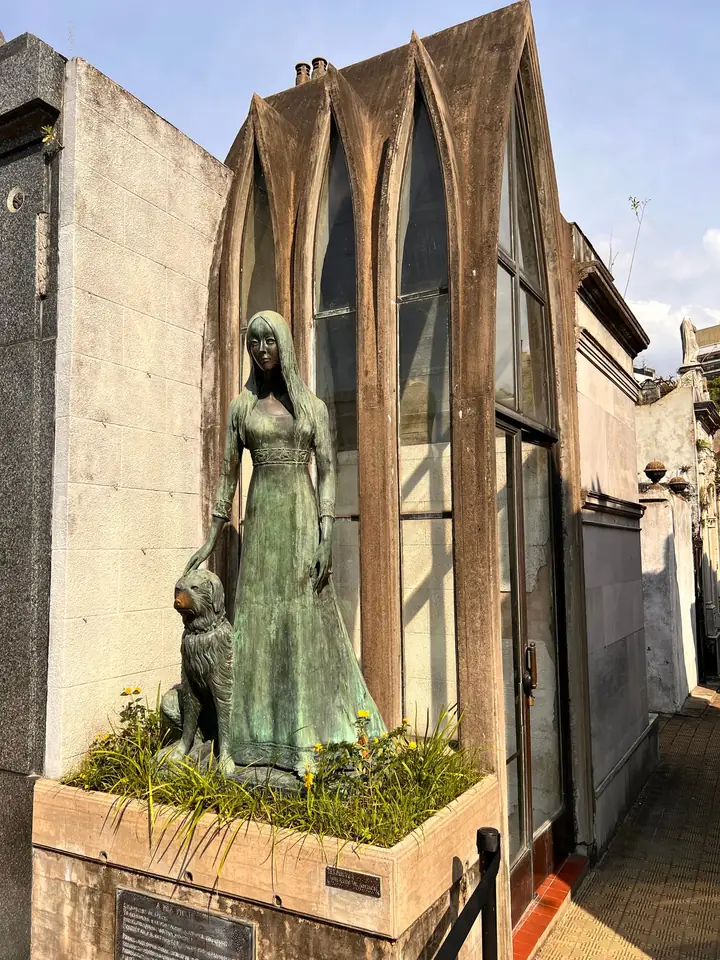
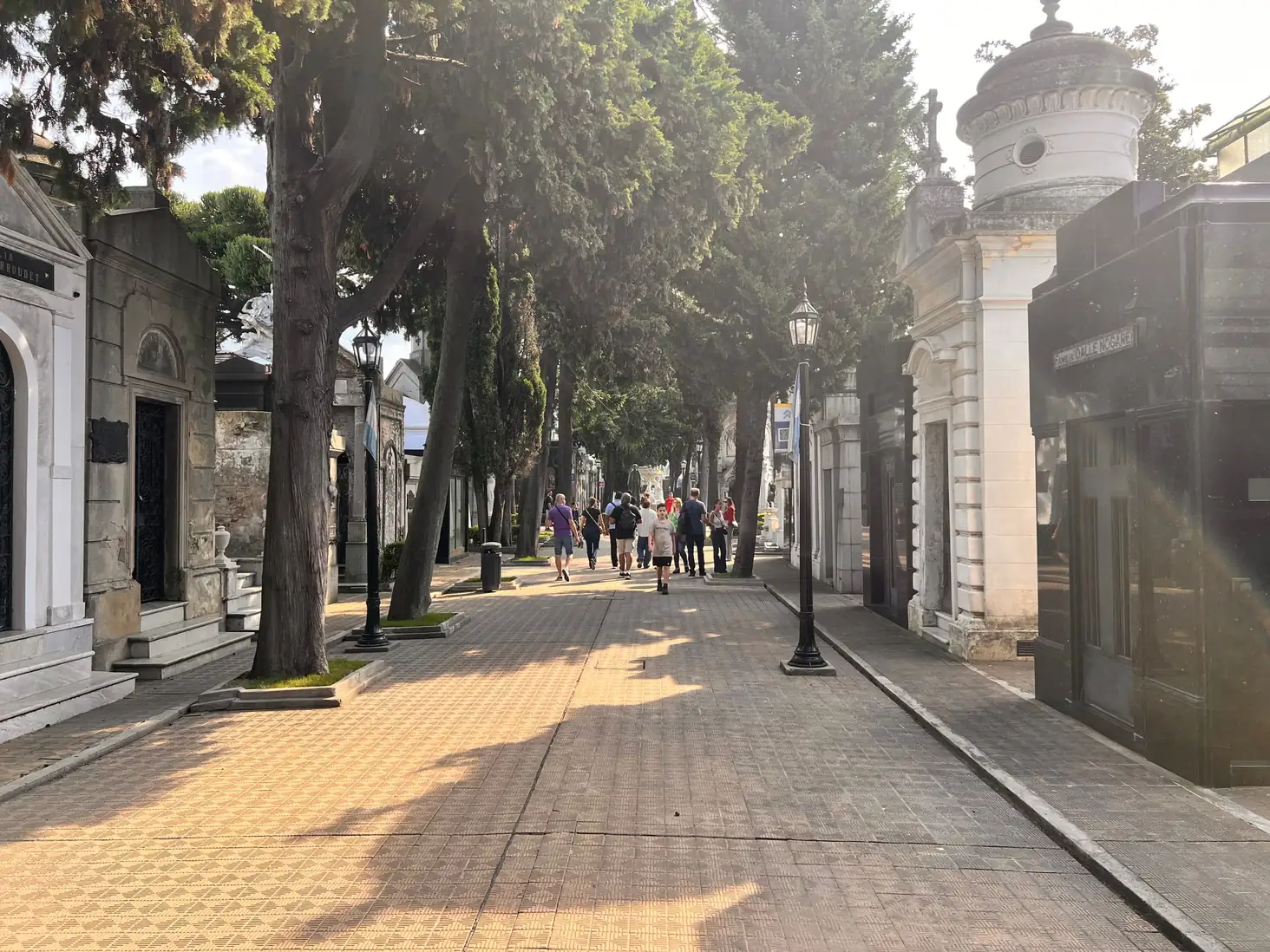
La Recoleta Cemetery itself looks less like a burial ground and more like a miniature city of stone. Marble chapels and family mausoleums rise like tiny cathedrals along narrow, shadowed lanes. Many tombs are privately owned and maintained by generations of the same families; beneath each ornate facade, the burials rest below ground. Statuary, stained glass, and European-influenced architectural flourishes turn remembrance into public art: a place where history and memory are literally sculpted in stone.
Walking those aisles felt almost surreal. The cemetery is far from neglected; it hums with life through the people who visit, the caretakers who tend the grounds, and the stories etched on plaques and reliefs. Every monument seemed to carry a personal history: grief, pride, reverence, and the small dramas of ordinary lives elevated into permanence.
And then there was Eva Peron's tomb. It draws visitors for reasons that go well beyond politics. To some, she is an icon of social justice and women's empowerment; to others, a symbol entwined with Argentina's turbulent 20th-century politics. But standing there, something else was evident: Evita had become more than a historical figure. She is an emotion, a character of myth sustained by memory, ritual, and storytelling.
Eva Peron's grave drew me in differently. My connection to her began years ago, when I first watched the film Evita and later saw Sharon Prabhakar's powerful stage rendition in Mumbai, directed with elegant precision by Alyque Padamsee -- memories that reminded me how film and theatre can revive distant lives.
She is not merely a historical footnote: a radio star, Juan Peron's first lady, a tireless advocate for labor rights, and the champion behind women's suffrage in Argentina in 1947, but an emotion threaded into the nation's identity. Her Eva Peron Foundation funded hospitals, schools, and housing projects, earning fierce loyalty among the working class. After her untimely death at 33 in 1952, the unusual posthumous journey of her embalmed body -- moving through secret relocations during political upheaval and eventual repatriation in 1976 -- only deepened her mystique.
It's tempting to reduce her to headlines: radio star, first lady to Juan Peron, champion of labor rights, founder of the Eva Peron Foundation. But her posthumous life -- in biographies, in film, in the global phenomenon of Evita -- is what keeps her present.
Standing there, the line "Don't Cry for Me Argentina" echoed in my head, and I thought about how remarkable it is that a woman who lived 75 years ago, thousands of miles away, became part of India's cultural memory through movies and theatre. Media's power was clear in that moment: stories travel across oceans and generations, and through performance they make history feel immediate and shared. Cinema and music transformed her into a figure that travels beyond geography; the theatrical Evita made her a part of international culture.